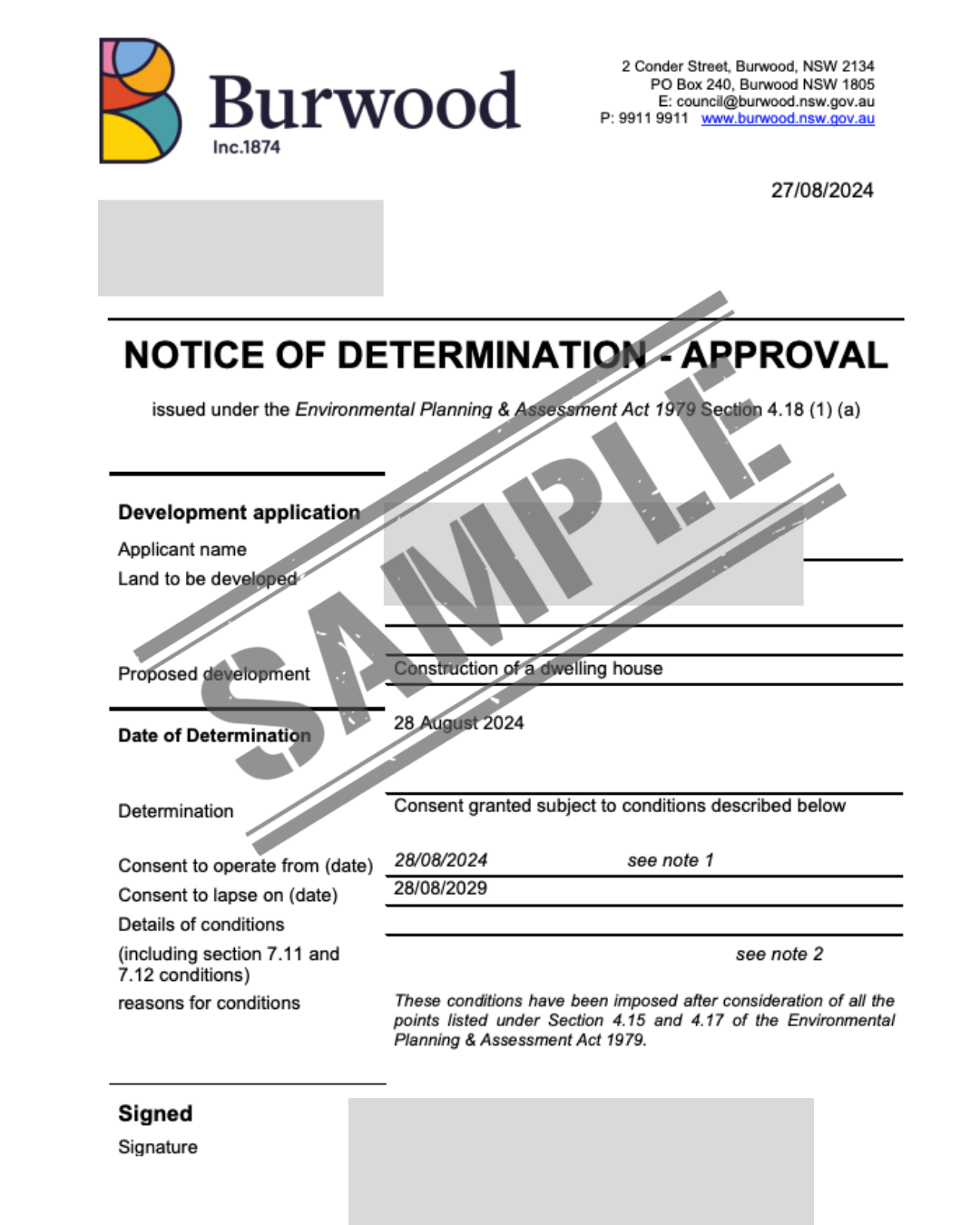
What is a Development Approval?
A development approval (DA) is the official permission you need from your local council to carry out certain types of development on your land. It ensures your project complies with zoning, planning, and land use rules.
How Do I Obtain This Document?
- Check with your local council to see if your proposed work requires a development application or if it falls under the category of "accepted development," which doesn't need approval.
- Prepare your development application. Make sure your plans comply with council rules and zoning requirements. Include:
- Site plan and elevations
- Floor plans
- Landscape plans (if applicable)
- Engineering, traffic, or environmental reports (if required)
- Lodge your application directly to your local council. Alternatively, some councils allow a private certifier to lodge the DA on your behalf for certain developments
- Pay the required application fees
- Council will review the application
- If approved, you get a DA notice, often with conditions you must meet. You can then apply for a building approval to start construction
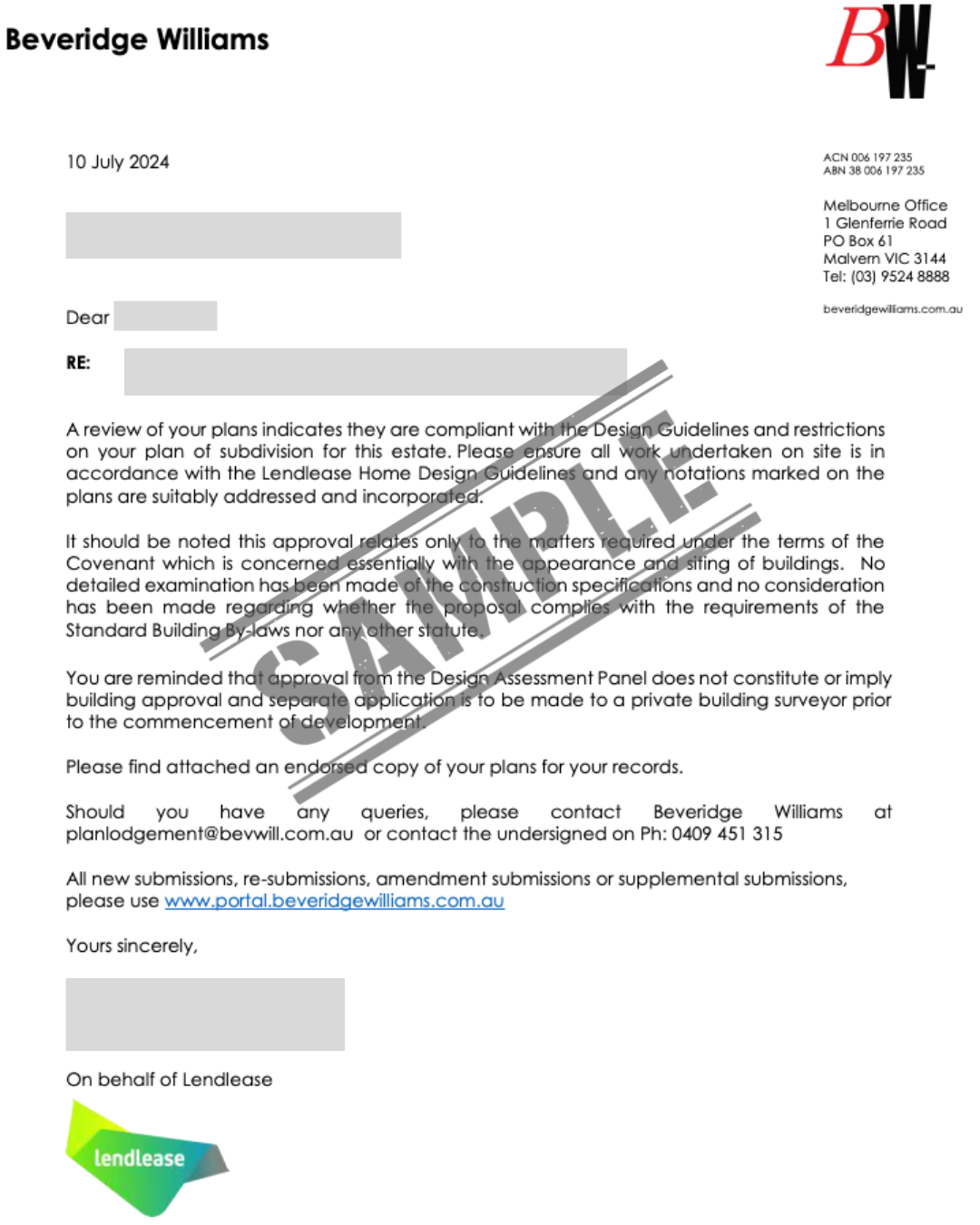
What is a Covenant Approval?
A covenant approval is permission required when your property is subject to a covenant or restriction on title that limits what you can do with the land.
Common examples:
- House design or height restrictions
- Fence or boundary requirements
- Restrictions on subdivision or land use
How Do I Obtain This Document?
1. Get your property title
- Find your lot and plan number or street address.
- Go to OTIS – Online Title and Image Searches and perform a Title Search.
- Pay the fee and download your title, which shows owners, covenants, easements, and lot details.
2. Look at your title for any registered covenants or restrictions.
- Identify the covenant holder (developer, land company, or association).
- Submit your plans or proposal to them for covenant approval before building.
3. Identify the covenant holder. Usually the developer, land company, or community association listed on the title.
4. Prepare your plans or proposal. Include detailed construction or modification plans you want to carry out.
5. Send your plans to the covenant holder with a clear request for approval.
6. The covenant holder reviews your plans and may approve, reject, or request changes.
7. Once approved, you get a written covenant approval document to use with your council or certifier.