What Is an Acoustic Report, and Why Might You Need One?
An Acoustic Report assesses how sound travels in and around your building site — and whether your project meets the required noise control standards under planning regulations or building codes.
You may need this report if:
- Your site is close to a main road, train line, airport, or industrial area
- Your council or certifier has requested an assessment of noise impact
- You're building in a multi-residential zone or attached housing development
- Your design includes party walls, home theatres, or studios
An Acoustic Report helps demonstrate compliance and can recommend practical solutions like insulation upgrades or construction methods to reduce noise.
What does an Acoustic Engineer do?
Your Acoustic Engineer will complete works according your agreed scope of works.
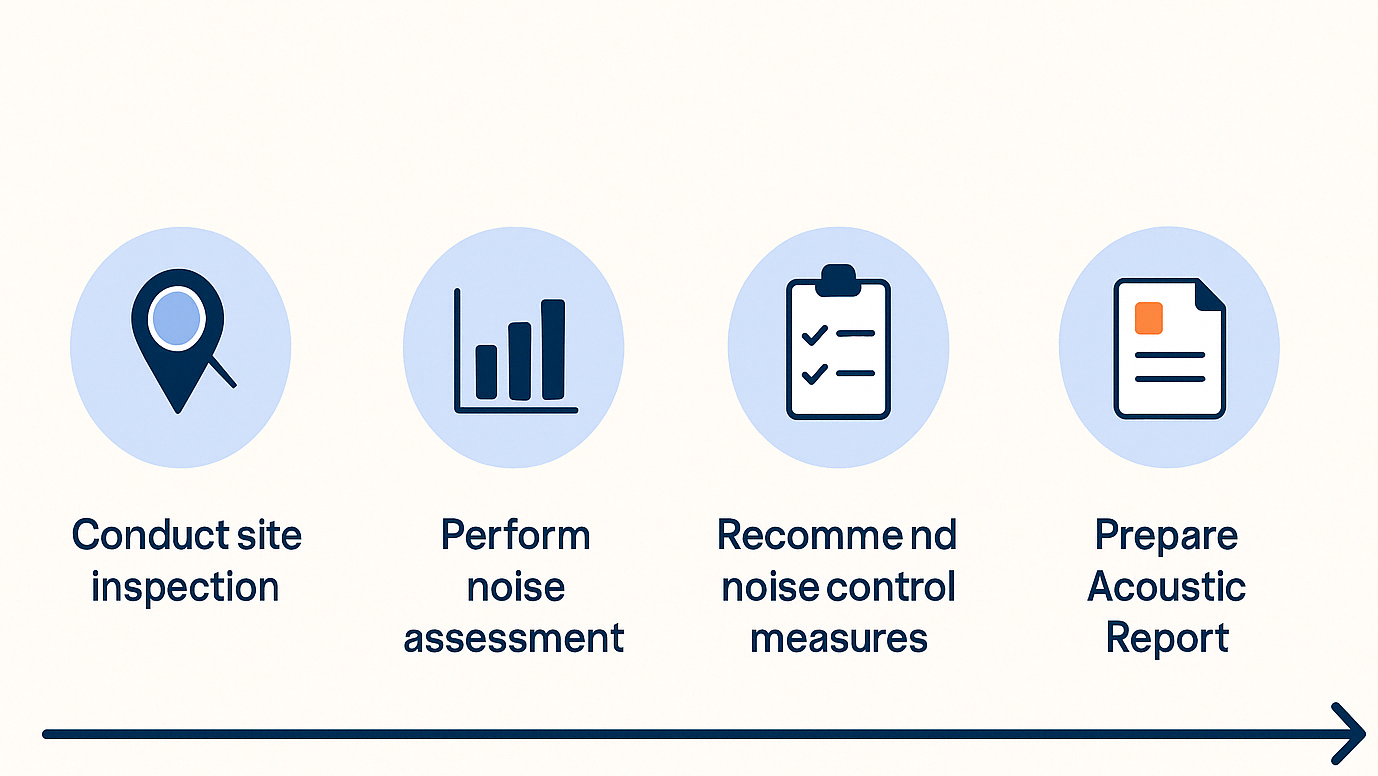
Typically, an Acoustic Engineer will:
- Review your building plans and assess the site's context to determine potential noise risks (e.g. traffic, aircraft, neighbouring properties, or internal room usage)
- Identify whether your project is located in a noise-affected zone or near major transport corridors that require compliance with SEPP (Infrastructure) 2007 or council planning controls
- Conduct site testing (if required) or use mapping and modelling to assess likely noise exposure levels
- Prepare an Acoustic Report that includes:
- Identified noise sources
- Assessment against applicable criteria (such as the NSW Noise Policy for Industry or council standards)
- Recommended treatments for compliance (e.g. acoustic glazing, upgraded insulation, wall construction methods)
- Provide an official certificate or report to be submitted with your DA, CDC, or CC application
In many cases, an Acoustic Report is a condition of council approval or required by your certifier. It helps ensure your home is protected from unwanted noise — and that your project meets the necessary planning and construction regulations.
Barry's Toolbox
If you’re near a busy road, don’t wait to get this done. Noise problems are easier to prevent than fix.
A good Acoustic Report doesn’t just tick boxes — it can make your home quieter, more private, and more comfortable to live in.
What to Look For in an Acoustic Engineer
You’re looking for someone who:
- Has proven experience conducting residential noise assessments
- Offers clear, fixed pricing with no hidden fees
- Provides a fast turnaround – ideal if your application deadline is approaching
- Has local expertise in NSW planning regulations and standards
Before You Begin: What You’ll Need Ready
To get quotes from Acoustic Engineers for your Acoustic Report, you’ll need:
- Draft or finalised building plans (site plan, floor plan, elevations)
- Confirmation of your planning pathway (CDC or DA)
- Details of any known noise risks (e.g. proximity to major roads, rail, or industrial sites)
- Relevant DA conditions or council advice (if available)
- Site information (e.g. zoning, lot details, or overlays)
Average Timeframe
For this task, Pros typically provide quotes within
3–5 business days.
When Can I Expect Quotes?
Timeframes often vary based on demand and the type of Pro you're engaging (e.g. a plumber). If additional communication or clarification is needed is needed, the quoting process may take longer.
Don't be alarmed if you don't receive quotes or communication from any Build Buddy Pros straight away. Some work is more complex and the Pro may need time to comprehend your documents or scope of work. Depending on the job, there may even be some work required by the Pro before they are able to quote (e.g. a site visit might be required).
If the average timeframe indicated here has passed, and you have not received any messages or quotes, please feel free to contact the Build Buddy Expert Guidance and Support team for an update on quoting for this task.
Frequently Asked Questions
I’m not near a busy road — do I still need an Acoustic Report?
Possibly not. If your site isn’t affected by obvious external noise (like traffic, trains, or nearby commercial zones), you may not need one. But sometimes, your council or certifier may still request an acoustic report based on zoning or local overlays.
Can I use the Acoustic Report later in the build?
It’s best to get the Acoustic Report done early — before your approval is lodged. The engineer’s recommendations may affect window types, wall insulation, or ventilation design. Including it early avoids having to redesign later to meet compliance.
Will the engineer visit the site?
Not always. Some Acoustic Reports can be done using mapping tools and modelling, especially for standard lots. But if your site is near a noise source or has unusual features, the engineer may recommend a site inspection or sound testing. This will usually be included in the quote or discussed upfront.
How to Complete this Task?

STEP 1
Review and Adjust the Scope of Works
Timeframes may vary based on demand and the type of Pro you're engaging (e.g., a plumber). If additional communication or clarification is needed, the quoting process may take longer.
STEP 2
Confirm Required Documents Are Uploaded
Check that the following required document(s) are uploaded for this task. These are essential to proceed:

STEP 3
Update the Quality Assurance Checklist
Go to the
Quality Assurance tab in this task and review the checklist. Edit any details to suit your project requirements. Being clear and upfront helps set expectations with the Pro. Updating the checklist before requesting quotes ensures everyone is aligned.

STEP 4
Request Quotes
Click the
orange ‘Request Quotes’ button
to start the quoting process.

STEP 5
Review the Quotes
Once you receive quotes:
- Review each one carefully, including the payment schedule and any special terms
- Download attached quote documents for detailed review
- Check each Pro’s profile and read past client reviews

STEP 6
Communicate with the Pro
If needed, message or call the Pro to clarify details or negotiate terms.
STEP 7
Accept a Quote
Choose the quote that best suits your needs. Once you accept a quote, any other pending quotes will be automatically declined. An agreement will automatically be generated.
STEP 8
Complete the Tasks In Your App
New tasks will appear to guide you through this job — follow each step carefully. Make sure to use the
Quality Assurance Checklist, and refer to your
contract and
final Scope of Works whenever needed.
NEED HELP?
Reach Out to Your Build Buddy Pro
If you have any questions or need a hand, your Build Buddy Pro is your best first contact. They’re a licensed expert in their field and can understand the ins and outs of your project. You can message them via the platform, or you can call them directly.
If you have already contacted your Build Buddy Pro and still need further assistance, the Build Buddy Expert Guidance and Support team are here to help. They will be able to guide you on your next steps or help you find answers to any questions you may have.